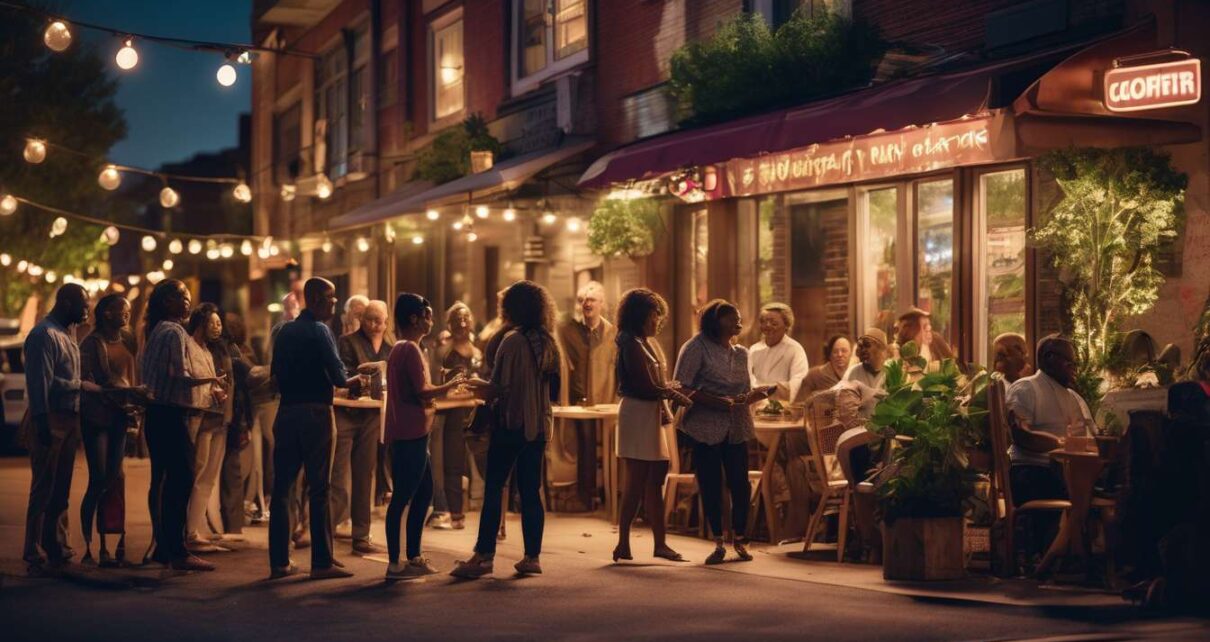
Community conversations about nightlife have intensified as cities revisit zoning, safety, and economic recovery policies. We track policy updates, neighborhood meetings, and media coverage that increasingly recognize exotic dancing venues as stakeholders in urban vitality rather than hidden liabilities.
As journalists, advocates, and neighbors, we aim to show how proactive community relations stabilize venues and reduce tensions. Key elements include:
- Transparent communication between venues and local residents.
- Safety partnerships with law enforcement and public-health entities.
- Workforce support such as training, benefits, and pathways to resources.
Recent municipal initiatives pair night-time economies with public-safety resources, illustrating a shifting trend. These efforts suggest that regulation combined with collaboration yields better outcomes than adversarial approaches.
We believe documenting success stories and sharing practical engagement strategies can guide venue managers and community leaders toward durable solutions. Important actions to promote include:
- Building regular neighborhood forums.
- Establishing memoranda of understanding for safety and noise management.
- Centering workers’ perspectives in policy and program design.
Our goal is to move conversations from polarized debate to pragmatic cooperation, ensuring these businesses operate responsibly while contributing to local culture, employment, and economic resilience.
Context and Trends
Local and national trends affecting exotic dancing venues include regulatory shifts, economic pressures, and changing community attitudes. These forces are converging and reshaping how venues operate and engage with their neighborhoods.
Regulatory changes are emphasizing collaboration over confrontation. Municipalities are updating licensing, zoning, and safety requirements, and there are clearer calls for coordinated approaches between regulators and venues.
- We should lean into dialogue with authorities.
- Prioritize cooperative solutions that balance public safety with venue viability.
Economic pressures are forcing business-model innovation. Rising rents, higher staffing costs, and shifts in consumer spending are squeezing margins and prompting new operational strategies to protect livelihoods.
- Explore diversified revenue streams (e.g., events, memberships, merchandise).
- Reconsider staffing, scheduling, and compensation models to keep workers secure.
Community engagement is central to long-term stability. Building mutual trust through regular meetings, transparent communications, and shared problem-solving helps venues be seen as neighborhood partners rather than outsiders.
- Establish recurring neighborhood forums.
- Provide clear, accessible points of contact for residents and local businesses.
Harm reduction and workforce supports strengthen retention and safety. Prioritizing safer workspaces, training, and accessible health resources reduces risks and improves staff well-being.
- Implement safety protocols and de-escalation training.
- Offer on-site or linked health and counseling resources.
These trends intersect to create resilience. Sensible regulation combined with community partnerships and practical harm reduction builds venues that are sustainable and trusted.
Our commitment is to foster belonging, respect, and safety. Stable venues depend on inclusive, pragmatic relationships with performers, staff, neighbors, and regulators—preferring collaboration and mutual support over isolation or adversarial stances.
Stakeholder Mapping
We will identify and prioritize stakeholders whose interests, power, and needs directly affect venue stability.
Key groups to map:
- Dancers
- Staff
- Patrons
- Neighbors
- Local businesses
- Health providers
- Law enforcement
- Licensing boards
- Advocacy groups
For each stakeholder we will note:
- Influence (ability to affect permits, neighborhood sentiment, enforcement)
- Concerns (safety, livelihood, noise, community reputation)
- Mutual goals (safety, belonging, economic stability)
We will center safety and belonging by prioritizing dancers and staff.
Prioritization approach:
- Identify stakeholders with the most direct impact on dancer and staff livelihoods.
- Place those who seek safety and belonging in high-priority tiers.
- Include community engagement partners who amplify collective voice at the same priority level as frontline staff where appropriate.
We will assess leverage and openness to partnership.
Assessment elements:
- Who can affect permits and licensing decisions.
- Who shapes neighborhood sentiment.
- Who can offer or connect to harm-reduction services.
- Who enforces rules and regulations.
- Openness to collaboration and power dynamics.
We will map communication and contribution potential.
Mapping items:
- Contact frequency
- Preferred communication channels
- Potential contributions to stability initiatives (e.g., safety training, shared events, joint problem-solving committees)
We will design tailored engagement plans that balance regulatory collaboration with lived-experience insights.
Engagement plan components:
- Regular forums that include dancers and staff voices
- Joint committees for problem-solving with neighbors and businesses
- Partnerships with health providers for harm-reduction services
- Clear communication protocols with law enforcement and licensing boards
- Shared events to build positive community relationships
Outcome objective:By treating stakeholders as collaborators and distributing power equitably, we build a resilient network that protects livelihoods, nurtures trust, and keeps the venue integrated within the broader community.
Transparent Communication
We commit to transparent, timely communication that keeps dancers, staff, neighbors, and partners informed, heard, and involved in decisions that affect venue safety and stability.
We will share clear updates about policies, schedules, and any changes that touch on working conditions or community interactions.
We will hold regular forums and digital check-ins that center lived experience, so everyone feels they belong and can shape outcomes.
We will use straightforward channels—bulletins, opt-in texts, and moderated meetings—so messages reach people where they are.
We will invite feedback and report back on what we changed and why, strengthening community engagement.
We will emphasize consent, confidentiality, and practical guidance tied to harm reduction, ensuring communication reduces risk rather than stigmatizes.
We will document conversations and maintain open lines with local officials to foster regulatory collaboration that reflects on-the-ground realities.
By keeping dialogue honest, consistent, and actionable, we will build trust, diffuse misunderstandings, and support a stable venue where people feel respected and safe.
Safety Partnerships
We will build and maintain trusted safety partnerships with local health services, law enforcement, neighboring businesses, and peer-led organizations to coordinate prevention, response, and support measures.
We will meet regularly with partners to align expectations, share incident trends, and plan joint trainings that keep everyone safe and included.
We will center community engagement by inviting residents and patrons into structured dialogues so they feel heard and invested in practical solutions.
We will adopt harm-reduction practices, such as:
- accessible medical referrals,
- de-escalation protocols,
- anonymous reporting options,that protect people without criminalizing them.
We will pursue regulatory collaboration to clarify legal obligations, streamline permitting processes, and create transparent complaint pathways so venues and regulators work from the same facts.
We will document agreements and review them quarterly, adjusting when needs change.
We will assign clear contact points and mutual-aid steps for emergencies, and publish a concise safety guide so staff, performers, and neighbors know how to act and whom to call.
We will measure impact through shared metrics and use those results to keep improving together.
Workforce Supports
Comprehensive workforce supports: We’ll provide supports that prioritize fair pay, access to benefits, professional development, and wellbeing resources for performers and staff.
Transparent compensation and scheduling: We commit to transparent pay practices, predictable scheduling, and equitable tipping policies so everyone feels valued and secure.
Benefit access pathways: We’ll build pathways to access benefits—health care, mental health services, and financial counseling—so people can care for themselves and their families.
Ongoing skills training and career pathways: We’ll offer ongoing skills training in de-escalation, financial literacy, and career advancement, creating clear pathways for those who want to stay in the field or transition to other roles.
Peer-led wellbeing and harm reduction: We’ll center peer-led wellbeing programs and confidential counseling, and integrate harm reduction principles to reduce risk without judgment.
Feedback and belonging mechanisms: We’ll create feedback loops that invite staff input and foster belonging through:
- regular town-hall meetings,
- mentorship circles,
- and other participatory forums.
Community and health partnerships: We’ll coordinate with local organizations to expand community engagement and with health providers to offer on-site services.
Regulatory collaboration and accountability: We’ll seek constructive regulatory collaboration that protects workers’ rights and venue viability, and we’ll document outcomes so our workforce supports are accountable, sustainable, and responsive to the people who make our venues thrive.
Local Policy Tools
We’ll identify local policy tools—zoning, licensing, and workforce ordinances—that we can use to protect venue stability while safeguarding workers’ rights and public safety.
Zoning
- Thoughtful zoning can prevent arbitrary closures by creating predictable commercial districts where venues belong.
- Objective: establish clear zones and permitted uses so venues know where they can operate without sudden displacement.
Licensing
- Advocate for clear, non-discriminatory licensing that sets safety standards without criminalizing performers.
- Elements to include:
- Transparent application and renewal procedures.
- Non-arbitrary revocation criteria.
- Safety-based conditions that are evidence-driven, not moralistic.
Workforce ordinances
- Craft workforce protections that guarantee basic rights and supports for workers.
- Core provisions:
- Transparent dispute resolution processes.
- Access to health resources (testing, referrals, on-site outreach).
- Protections against retaliation for reporting safety or labor concerns.
We’ll center community engagement so neighbors, workers, and owners shape rules that fit local needs.
Harm reduction over punishment
- Prioritize harm reduction measures such as on-site health outreach, safe transportation options, and de-escalation training rather than punitive responses.
- Benefits: reduces stigma, improves safety outcomes, and fosters trust between venues and the community.
Regulatory collaboration
- Coordinate city agencies, public health, and venue representatives to reduce mixed messages and compliance burdens.
- Actions:
- Joint guidance documents and trainings.
- Single points of contact for compliance questions.
- Regular stakeholder meetings to resolve conflicts early.
By aligning policies with dignity and safety, we’ll build a stable environment where venues can operate openly, workers feel supported, and the broader community shares responsibility for sustainable, respectful nightlife.
Success Stories
We highlight concrete examples where local policies, partnerships, and worker-led initiatives have kept venues open, improved safety, and reduced conflicts between neighbors and nightlife businesses.
Mid-sized city — community engagement forums.
- A series of community engagement forums tied club owners, neighbors, and performers to a mediated code of conduct.
- The mediated code led to fewer noise complaints and a renewed sense of belonging for all parties.
- Key elements included regular meetings, a neutral mediator, and jointly agreed monitoring and feedback mechanisms.
District health coalition — harm reduction and staff training.
- A local health coalition worked with venues on harm reduction training and supplied naloxone and de-escalation resources.
- These measures cut on-site incidents and strengthened trust between staff and patrons.
- Ongoing refresher trainings and easy access to supplies kept the practices sustainable.
Regulatory collaboration — streamlined permitting and inspection clarity.
- A pilot program brought city licensing officials and a workers’ union together to streamline permitting and clarify inspection standards.
- The collaboration prevented arbitrary closures and reduced administrative confusion for venues.
- Clear timelines, published checklists, and a joint appeals process were central to the pilot’s success.
Common factors across these stories.
- Shared problem-solving, transparent communication, and mutual respect made stability possible.
- Centering inclusion and providing practical supports enabled exotic dancing venues to thrive while contributing positively to neighborhood life.
Actionable Next Steps
We’ll foster ongoing community engagement.
- Create regular listening sessions where staff, performers, residents, and officials share concerns and co-design solutions.
- Ensure diverse representation and rotate meeting times/locations to maximize participation.
We’ll implement harm-reduction measures.
- Provide training on de-escalation and conflict management for staff and performers.
- Make health resources accessible, such as sexual health services, mental-health referrals, and information on substance use support.
- Adopt clear safety protocols, including incident reporting procedures, witness support, and privacy protections to affirm dignity.
We’ll pursue regulatory collaboration.
- Form a joint task group of venue operators, performers, neighbors, public health, licensing, and enforcement officials.
- Review licensing, zoning, and enforcement practices to reduce adversarial interactions and align expectations.
We’ll set measurable goals.
- Reduce neighborhood complaints through targeted interventions.
- Increase incident-reporting transparency while protecting privacy.
- Track training completion and other capacity-building metrics.
We’ll establish communication norms.
- Provide timely updates about issues and responses.
- Designate liaisons for venues, neighbors, and city agencies.
- Create conflict-resolution pathways (e.g., mediators, escalation steps).
We’ll secure resources and supports.
- Pursue small grants or city support for safety upgrades (lighting, cameras where appropriate, locks), staff training, and outreach.
- Pool resources regionally when individual venues cannot cover costs.
We’ll evaluate and adapt together.
- Evaluate progress quarterly, using the measurable goals above.
- Celebrate shared wins to reinforce trust and participation.
- Adjust tactics collaboratively when data or feedback indicate needed changes.
Outcome: These steps build belonging, mutual respect, and sustainable venues that serve workers, patrons, and neighbors alike.
How do venue owners balance the need for profitability with implementing potentially costly safety and community engagement measures?
We ask how owners balance profit with costly safety and engagement measures; we know it’s about values and sustainability.
We prioritize transparent budgeting, phased upgrades, and partnerships with local services to share costs.
- Transparent budgeting clarifies where funds go and builds stakeholder trust.
- Phased upgrades spread capital expenses over time, reducing immediate financial strain.
- Partnerships with local services (e.g., health providers, nonprofits) allow cost- and resource-sharing that enhances services without full in-house expenditure.
We’ll seek grants, sponsorships, and community input to align spending with neighborhood needs.
- Apply for public and private grants targeting safety, public health, or community development.
- Secure corporate or philanthropic sponsorships for specific programs or capital projects.
- Solicit community input through surveys, meetings, or advisory groups to prioritize investments that deliver the greatest local benefit.
We’ll train staff to reduce risk and boost trust, and we’ll track outcomes so investments support both wellbeing and long-term financial health.
- Staff training lowers liability and incident-related costs while increasing resident and visitor confidence.
- Outcome tracking (incident rates, utilization of services, resident satisfaction, ROI) provides evidence to guide future spending and demonstrates the financial and social return on safety and engagement investments.
What specific insurance products or clauses should exotic dancing venues consider to cover community-facing incidents or liability arising from partnerships?
Question: What insurance covers community-facing incidents or liability from partnerships?
Recommended coverages:
-
General liability — Covers bodily injury and property damage arising from your organization’s operations and events.
-
Liquor liability — Protects against claims related to injuries or damages caused by alcohol served at events.
-
Sexual misconduct / abuse coverage — Provides protection for claims of abuse or sexual misconduct involving staff, volunteers, or participants.
-
Umbrella / excess liability — Offers higher limits above primary liability policies to cover large or catastrophic claims.
Additional endorsements and coverages to include:
-
Vendors and partner endorsement — Extends coverage to activities of contracted vendors and partners when they’re working on your behalf.
-
Contractual liability — Ensures coverage for liabilities you assume under written contracts with partners or venues.
-
Cyber / privacy insurance — Covers breaches, data loss, and privacy incidents when partners share or access sensitive information.
-
Employment Practices Liability (EPLI) — Protects against claims from employees or contractors related to discrimination, harassment, wrongful termination, and other workplace disputes.
Risk-management requirements and practices:
-
Waivers and releases — Use participant waivers or partner agreements where appropriate to reduce exposure.
-
Additional insured status — Require partners, funders, or venues to add your organization as an additional insured when they assume responsibility for operations that could create liability.
-
Periodic policy reviews — Regularly review and update coverages and limits to reflect evolving partnerships, new activities, and growth in exposure.
Summary: Combine primary liability policies (general, liquor, sexual misconduct), excess limits (umbrella), tailored endorsements (vendors, contractual), and specialty coverages (cyber, EPLI). Reinforce insurance with contractual protections (waivers, additional insureds) and periodic reviews to keep protections aligned with changing partnerships.
How can venues measure the long-term impact of their community relations efforts in a way that satisfies investors, lenders, or board members?
We will measure long-term impact using clear, specific metrics.
- Reputation surveys
- Repeat partnerships
- Community program outcomes
- Financial indicators (customer retention, revenue stability)
We will report and validate findings regularly.
- Report trends quarterly using stories and data dashboards.
- Tie outcomes to strategic goals.
- Set KPIs validated by third-party evaluations.
We will maintain transparency for stakeholders.
- Publish annual impact reports that connect community value to risk reduction and return.
- Ensure reports provide confidence for investors, lenders, and board members.
Conclusion
You’ve seen how proactive community relations keep exotic dancing venues stable, safe, and accepted.
By mapping stakeholders, communicating transparently, partnering with safety and workforce supports, and using local policy tools, you reduce conflict and boost wellbeing.
Learn from nearby success stories, then take clear action:
- Build relationships.
- Adopt best practices.
- Advocate sensible policies.
Do this, and you’ll protect livelihoods, enhance neighborhood safety, and create lasting, mutually respectful community ties.