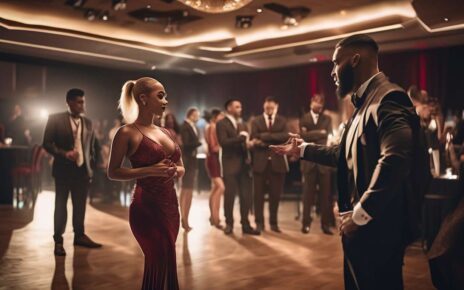
Between neon glare and hushed backrooms, we find worlds that many assume belong either to liberated self-expression or to predatory commerce, and we refuse to accept such easy binaries.
We set out to trace how exotic dancing and nightlife weave together performance, labor, desire, and regulation, revealing layers that ordinary accounts ignore.
As researchers, we draw on interviews, participant observation, and archival sources to map how dancers negotiate agency and vulnerability, how venues shape sociality, and how public policies refract moral panics into lived consequences.
We attend to aesthetics and economics, to sensuality and safety, to nightlife’s rhythms and the city’s pulse, believing that none of these elements stands alone.
By juxtaposing dancers’ narratives with juridical discourses and audience practices, we aim to complicate assumptions about exploitation and empowerment, showing instead a field of contingent practices where culture, capital, and care continually intersect and contest one another.
Nightlife as Culture
We see nightlife as a living cultural force that shapes social norms, artistic expression, and communal identity.
We study nightlife anthropology to understand how late-night scenes become sites of belonging, where people gather, perform, and negotiate meaning together.
In clubs and bars, exotic dance labor isn’t just work; it’s a social practice that codes intimacy, aesthetics, and labor relations.
- Performers and patrons co-create shared rituals.
- Dance, dress, movement, and exchange are forms of communication that produce meaning and membership.
We pay attention to venue regulation and how policies influence who feels welcome, who’s excluded, and how safety and creativity are balanced.
- Formal rules (licenses, curfews, zoning) shape the possibilities for nightlife.
- Informal rules (door policies, dress codes, unspoken norms) mediate inclusion and exclusion.
By observing interactions, spatial arrangements, and informal rules, we learn how communities form around sound, style, and mutual recognition.
We view nightlife as a network of relationships—performers, staff, regulars, newcomers—where identity and solidarity are produced nightly.
Together, we can advocate for fair conditions and inclusive spaces that honor the cultural labor at the heart of nocturnal life.
Histories of Exotic Dance
Across continents and centuries, exotic dance has evolved from ritualized performance and theatrical spectacle to a contested site of commerce, gendered labor, and cultural expression.
We map shifts in performance and venues
- Street fairs
- Music halls
- Modern clubs
These shifts are traced through nightlife anthropology, identifying how social norms, migration, and capitalism shaped who performed and why.
We acknowledge the people and communities who made venues central to urban life — organizers, workers, and local networks — while recognizing how exotic dance labor has been alternately stigmatized, regulated, and defended as work.
We explore legal histories that structured the field, including:
- Obscenity trials.
- Zoning laws.
- Licensing systems.
- Contemporary venue regulation.
These legal frameworks influence safety, surveillance, and economic opportunity for performers and venues.
We listen for stories of solidarity, union drives, and mutual aid that reveal collective strategies to claim dignity and rights.
We situate these histories within broader movements for labor rights and cultural recognition, inviting readers to see themselves as part of an ongoing conversation.
Together, we commit to researching with care, centering voices most affected by policy and prejudice, and building an inclusive account of nightlife’s past.
Performance and Embodiment
We examine how performers use movement, costume, and spatial choreography to shape audience perception, claim agency, and negotiate bodily labor.
Performance and embodiment are sites of skillful storytelling. Touch, gaze, and pacing build mutual recognition between performer and patron, creating exchanges that are both aesthetic and interpersonal.
Bodies become communicative instruments, calibrated through practice and peer learning. This connects to a broader nightlife anthropology that frames meaning beyond mere spectacle.
Costume choices—ranging from subtle accessories to stagewear—help performers assert identity and set boundaries while inviting communal belonging.
Spatial choreography, from pole work to floor patterns, organizes emotional economies and safety strategies in shared venues. These patterns structure movement, attention, and interaction in ways that support performers’ labor and wellbeing.
External constraints such as venue regulation shape staging and access, but performers deploy lived, embodied tactics to claim presence and care for themselves and one another.
By centering embodiment, we create a more inclusive understanding of exotic dance labor as culturally rich, agentive work that fosters connection.
Labor Dynamics
Many performers juggle multiple roles—entertainer, manager, marketer, and caretaker—to sustain income, navigate tipping economies, and protect their wellbeing.
We study how nightlife anthropology reveals these layered tasks as collective strategies, not isolated hustles.
In our observations, exotic dance labor is organized around peer networks that share knowledge about shifts, safety practices, and fair pay, fostering a sense of mutual support.
We note that venue regulation shapes everyday choices: licensing, curfews, and enforcement determine when dancers can work, how they interact with patrons, and what protections are available.
By centering workers’ voices, we see creative responses that mitigate precarity and build community:
- Coordinated schedules to maximize income and coverage.
- Informal childcare swaps so parents can work.
- Pooled transportation to reduce costs and increase safety.
We also document tensions when management priorities clash with worker-led norms, and how advocacy for transparent contracts and health resources strengthens collective bargaining.
Our approach connects detailed ethnographic evidence with actionable policy concerns, enabling readers who want belonging to recognize both the structural constraints and the cooperative practices that sustain people in this demanding field.
Audiences and Desire
We examine how audiences’ expectations, fantasies, and social cues shape performers’ techniques, boundaries, and emotional labor in clubs.
Audiences bring varied desires—intimacy, spectacle, status—which guide rhythms of interaction.
Nightlife anthropology shows how collective norms and small gestures prompt dancers to calibrate distance, costume, and conversational tone.
Performers negotiate consent and safety while sustaining connection; exotic dance labor is emotional, skilled, and responsive to crowds.
Belonging arises when patrons and workers share tacit rules:
- eye contact
- tipping etiquette
- respectful banter
Venues that align policies with these norms reduce friction.
- Fair regulation balancing safety and livelihood supports mutual trust.
Performers report that audiences can either affirm or erode dignity, so practices that foster inclusion are central.
Nightlife is a shared cultural space where care, commerce, and desire co-produce social belonging—readers are invited to see it as such.
Venue Architectures
We examine how club layouts, lighting, and circulation shape interactions between performers, patrons, and staff, and how design choices manage visibility, safety, and intimacy.
Seating arrangements, stage placement, and backstage access create zones of closeness and distance that support belonging while protecting workers.
Using nightlife anthropology, we read these built choices as cultural texts:
- Elevated stages signal spectacle.
- Circular seating invites group connection.
- Private booths foster one-on-one rapport.
Thoughtful design can center exotic dance labor dignity by providing clear sightlines, secure exits, and communal staff spaces that reduce isolation.
Lighting schemes and acoustic design modulate comfort, allowing performers to control exposure and patrons to engage respectfully.
Venue regulation expectations influence design decisions, with compliance shaping spatial choices (this discussion focuses on built features, not policy specifics).
By concentrating on tangible architectural features, we show how environments cultivate mutual respect, safety, and a sense of shared belonging for everyone who moves through these nightlife spaces.
Law, Policy, and Policing
Across jurisdictions, laws, policing practices, and administrative policies shape how clubs operate, who feels safe inside them, and what kinds of labor and interaction are permitted.
Nightlife anthropology helps trace the uneven application of venue regulation.
- It examines zoning, licensing, and selective enforcement.
- It shows how the same formal rules can be applied differently across neighborhoods and populations.
Exotic dance labor is often regulated indirectly.
- Rules frequently criminalize ancillary activities (e.g., solicitation, loitering, alcohol restrictions) rather than the core work itself.
- This indirect regulation produces precarious conditions for performers and staff — instability, limited bargaining power, and legal vulnerability.
Policy discussions must include the voices of workers and community members.
- Inclusion of those directly affected ensures regulations support dignity and belonging rather than exclusion.
- Participatory processes improve legitimacy and produce more workable, humane rules.
Policing tactics, curfews, and surveillance intersect with racialized and gendered dynamics.
- Enforcement practices can shape who is able or willing to occupy nightlife spaces.
- These dynamics affect patterns of harassment, displacement, and community trust.
Informal practices often reshape formal administrative tools.
- Inspections, local complaints, and business pressures reconfigure day-to-day operations.
- These informal mechanisms can be as powerful as written regulation in shaping working conditions and access.
We advocate for evidence-based, rights-respecting venue regulation.
- Balance community concerns with the needs of workers, patrons, and neighborhood life.
- Prioritize inclusion and safety for all participants in nightlife.
- Use data and lived experience to craft policies that foster inclusion across urban nights.
Safety, Solidarity, and Care
We center safety, solidarity, and care by supporting peer-led safety practices, collective bargaining, and accessible health and legal resources for performers and staff.
We build trust through shared protocols such as check-ins, buddy systems, and de-escalation training that respect dancers’ autonomy and labor needs.
We document informal safety networks by drawing on nightlife anthropology to show how communities craft practices that complement formal venue regulation, and we push for policies that reflect lived experience.
We advocate for workplace protections that treat exotic dance labor as legitimate work, including:
- Fair contracts.
- Transparent fee structures.
- Employer-funded health services.
We foster mutual aid and rapid-response systems by creating mutual aid funds and rapid-response legal teams so people feel seen and supported after incidents.
We cultivate peer negotiation spaces where staff, management, and performers meet as peers to negotiate standards, reducing isolation and stigma.
We center collective care practices by implementing rest policies, mental health access, and confidential reporting so belonging becomes operational, not optional.
We make nightlife safer, more equitable, and resilient for everyone who brings life to the stage.
How do exotic dancers negotiate financial planning, taxes, and long-term economic security given the often-informal payment structures in nightlife work?
Question: How do dancers handle finances amid informal pay?
Short answer: Dancers combine conservative budgeting, daily cash tracking, partial formalization of income, immediate saving for taxes and emergencies, professional or peer advice, diversified income streams, retirement planning, and community resource-sharing.
Key practices
Conservative budgeting
- Create a baseline budget using a low/median estimate of monthly income.
- Prioritize essentials (rent, food, transport) and allocate a small flexible buffer for irregular months.
Daily cash tracking
- Track cash received each day to avoid losing sight of informal payments.
- Keep a simple log (paper, notes app, or spreadsheet) showing date, source, and amount.
Formalizing income with bank accounts and prepaid cards
- Deposit as much cash as possible into a bank account to create a financial record.
- Use prepaid cards or reloadable debit cards for day-to-day spending when bank access is limited.
Immediate tax and emergency savings
- Set aside a fixed percentage of every payment immediately for taxes (estimated quarterly taxes if self‑employed).
- Build an emergency fund by automatically moving a small portion of each payment into a separate savings account or envelope.
Consulting accountants and peer advisors
- Seek out friendly/accountant services experienced with irregular or gig income.
- Use peer advisors or community members for practical tips and referrals to inexpensive tax help.
Diversified income
- Pursue multiple revenue streams such as teaching, private coaching, workshops, choreography, merch, small businesses, or gig apps.
- Invest in training and networking to increase demand and command higher pay.
Retirement planning for self‑employed performers
- Open individual retirement accounts (IRAs) or self‑employed retirement vehicles (SEP IRA, Solo 401(k)) when possible.
- Contribute regularly even if amounts are small; automated transfers help.
Community support and knowledge‑sharing
- Build or join local networks to share resource lists (cheap healthcare, tax clinics, rehearsal spaces), bulk-buy supplies, and swap skills.
- Create group funds or rotating savings schemes when appropriate and trusted.
If you want, I can:
- Help build a one‑page budget template tailored to irregular income.
- Draft a daily cash log spreadsheet.
- List low-cost tax resources and retirement accounts available in your country.
What mental health resources or counseling options are available specifically for performers who experience trauma, burnout, or stigma related to exotic dancing?
Specialized therapists: We can find clinicians who work with performers and artists and who are experienced in treating trauma, burnout, and stigma. These therapists often use trauma-informed approaches such as EMDR and CBT, and can provide confidential individual therapy.
Peer-led support groups: Peer groups—either in-person or online—offer shared experience, emotional support, and practical coping strategies. They can reduce isolation and provide ongoing community care.
Harm-reduction organizations: These groups offer confidential counseling, crisis services, and practical supports with a focus on reducing harm rather than punishing behavior. They often work nonjudgmentally with performers’ specific needs.
LGBTQ+ and sex-worker advocacy groups: Advocacy organizations maintain referral networks for culturally competent care and can connect performers to therapists, legal help, and social services that respect identity and work realities.
Online therapy platforms: Many platforms provide sliding-scale fees, flexible scheduling, and remote access—useful for performers with irregular hours or travel. Look for therapists with experience in trauma and performer-specific issues.
Trauma-informed clinics: Clinics that explicitly offer trauma-informed care provide evidence-based treatments (for example, EMDR and CBT) and create environments that prioritize safety and consent.
Priorities for choosing supports:
- Safety — ensure confidentiality and a trauma-sensitive approach.
- Community-based care — favor options that integrate peers and lived experience.
- Respect for autonomy and dignity — choose services that center consent, nonjudgment, and the performer’s goals.
Next steps:
- Identify local and online providers with performer-, LGBTQ+-, or sex-worker-competent care.
- Contact advocacy or harm-reduction groups for referrals and crisis resources.
- Explore peer support groups or online communities for ongoing connection.
- Ask prospective therapists about trauma training (EMDR/CBT), confidentiality, sliding scales, and availability.
If you’d like, I can search for specific organizations, directories, or referral resources in a city or region you name.
How do technology and social media (e.g., online tipping, subscription platforms, livestreaming) change the economic models, audience relationships, and privacy concerns for exotic dancers?
Technology and social media broaden income streams by enabling online tipping, subscriptions, and livestreams. These tools let dancers monetize performances directly, reach paying audiences globally, and create recurring revenue through membership-style offerings.
They enable building loyal fan communities where dancers can engage regularly, receive feedback, and cultivate deeper relationships that support long-term careers. Platforms let creators experiment with content formats and reward most engaged supporters.
Platform control over content and branding gives dancers greater autonomy to shape their public image and distribute work on their own terms. This can reduce dependence on traditional gatekeepers and open opportunities for niche and independent careers.
At the same time, privacy and safety risks increase, including doxxing and harassment, and the line between personal and professional life becomes blurred. Public exposure can lead to unwanted attention, stalking, or reputational harm.
Adopted strategies focus on safety, income diversification, and mutual support to protect wellbeing and sustain autonomy:
-
Implement safety measures:
- Use pseudonyms, separate professional accounts, and strict privacy settings.
- Limit geotagging and personal information in posts.
- Use moderation tools and report/ban abusive users.
-
Diversify revenue:
- Combine livestreams, subscriptions, teaching, sponsorships, and merchandise.
- Build multiple platform presences to avoid single-point failures.
-
Foster mutual support and boundaries:
- Create community norms and peer networks for crisis support.
- Set clear boundaries around access to personal life and working hours.
- Prioritize mental health resources and time off.
Overall, technology reshapes dancers’ work by expanding economic and creative possibilities while introducing new risks, so sustained autonomy depends on proactive safety practices, revenue diversification, and community-based support.
Conclusion
You’ve seen how exotic dancing and nightlife form rich cultural worlds. Histories shape today’s performances, embodied labor, and venue designs; audiences, law, and policy influence desire, risk, and access; and workers create safety through solidarity and care.
Moving forward, treat these spaces not as marginal entertainment but as sites of culture, labor, and rights. Research, policy, and community practice can better support dignity, reduce harm, and acknowledge complexity.