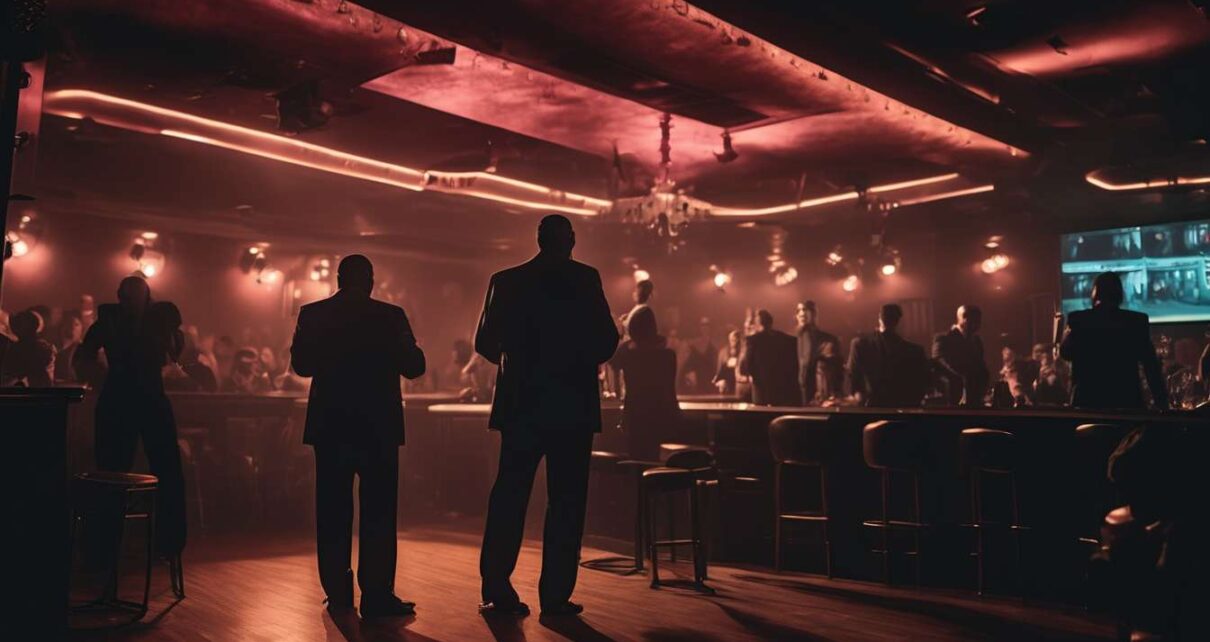
Justice requires safety and responsibility alongside entertainment.
Justice, like a locked door at closing time, reminds us that safety and responsibility must accompany entertainment. Venues are not just stages and spotlights; they are workplaces where performers, staff, and patrons intersect under conditions that demand clear, enforceable policies.
Venue security frameworks must protect dignity and livelihoods.
As markets for exotic dancing evolve—from backroom shows to mainstream nightlife fixtures—we face a moment to reassess how venue security frameworks protect dignity while preserving livelihoods. Security measures cannot be mere afterthoughts or reactive patches; they should be crafted with input from those they affect, balancing deterrence of harm with respect for performers’ autonomy.
Policy adoption and enforcement should consider unintended consequences.
In examining policy adoption, enforcement practices, and unintended consequences, we aim to map the terrain where regulation, business interests, and human rights converge.
Practical goal: foster safer, equitable environments without erasing culture.
Our goal is to illuminate practical steps venues can take to foster safer, more equitable environments without erasing the very culture that drew communities to these spaces.
Policy Landscape Overview
We map the range of venue security policies that shape performers’ safety and working conditions across different jurisdictions and club types.
We survey local ordinances, club rules, and informal norms to see how they intersect with performer safety, incident reporting, and staff training.
We note where policies mandate clear procedures and where ambiguity leaves workers exposed.
We highlight common policy elements—access controls, surveillance, and reporting channels—while recognizing that enforcement varies widely.
Common policy elements include:
- Access controls (e.g., ID checks, backstage locks)
- Surveillance (e.g., cameras, lighting)
- Reporting channels (e.g., incident logs, dedicated hotlines)
We emphasize inclusive language and shared responsibility so everyone feels they belong in shaping safer workplaces.
We call attention to how venues that invest in regular staff training and transparent incident reporting create trust among performers and colleagues.
We approach these differences without judgment, focusing on practical implications for day-to-day work and collective advocacy.
By mapping this landscape, we create a foundation for conversations about improvements, helping communities prioritize measures that protect performers and reinforce mutual accountability across diverse club environments.
Performer Safety Measures
Physical safety measures and access control
We prioritize concrete measures—access controls, secure entry points, backstage locks, and monitored corridors—so performers can move without unnecessary exposure.
- Design features: locked backstage areas, controlled entry, and monitored circulation paths.
- Visible support: on-floor staff presence and clear sightlines to reduce risk and increase reassurance.
Communication and rapid response systems
We set up reliable radios, panic buttons, and discreet signals so anyone can call for help quickly.
- Tools: two-way radios, silent alarms, wearable alert devices.
- Protocols: defined signal meanings, check-in procedures, and redundancy for failures.
Inclusive policy development and belonging
We build belonging by involving dancers in policy creation, ensuring safety policies reflect real needs rather than assumptions.
- Participation: regular consultation, feedback loops, and dancer representation in safety committees.
- Transparency: share policies and rationale openly with performers.
Training, drills, and de-escalation
We require regular staff training on de-escalation, boundaries, and emergency procedures, and run scenario drills to keep skills sharp.
- Curriculum: de-escalation techniques, consent and boundary respect, first aid, and emergency roles.
- Practice: scheduled drills, role-playing scenarios, and post-drill reviews.
Incident reporting, auditing, and follow-up
We maintain a transparent incident reporting system that protects confidentiality, encourages prompt documentation, and triggers follow-up actions.
- Reporting: easy-to-use channels, anonymous options, and clear timelines for acknowledgement.
- Audit and learning: review reports, share lessons learned, and update practices based on findings.
Accountability and support
We commit to clear accountability: managers review incidents, remedial steps are tracked, and support is available.
- Actions: documented remedial plans, tracked completion, and manager oversight.
- Support services: access to medical care, counseling, and return-to-work accommodations.
Culture and shared responsibility
We foster a culture where everyone looks out for each other and safety is a shared responsibility.
- Norms: encourage active bystander intervention and mutual respect.
- Reinforcement: recognize positive safety behaviors and continuously solicit feedback.
Patron Conduct Standards
We set clear, enforceable standards for patron behavior.
- These standards cover consent, prohibited contact, intoxication limits, and consequences.
- The goal is that everyone knows what’s acceptable and what will happen if rules are broken.
We make rules visible and spoken.
- No touching without explicit consent.
- No harassment.
- Defined intoxication thresholds that trigger removal.
We prioritize performer safety and communal respect.
- Patrons should feel welcomed while performers feel protected.
We outline immediate actions when rules are violated.
- Verbal warnings.
- Escorted exits.
- Bans, depending on severity.
We document every event through prompt incident reporting.
- This ensures transparency and consistent follow-up.
We involve performers in policy review.
- Their perspectives help shape expectations and reinforce a shared culture of care.
We train staff to apply standards calmly and fairly.
- Enforcement should be predictable and impartial.
Our approach builds belonging by balancing enjoyment with accountability.
- Respectful conduct preserves the venue’s atmosphere and the dignity of everyone who comes through our doors.
Staff Training Protocols
We’ll equip all staff with standardized, scenario-based training that teaches de-escalation, consent enforcement, emergency procedures, and unbiased incident documentation.
We’ll create clear modules that center performer safety and mutual respect, so everyone — dancers, bartenders, and security — feels included and supported.
Our staff training will combine:
- Role-play.
- Short classroom sessions.
- On-floor shadowing.These methods build confidence handling boundary violations, intoxicated patrons, and medical emergencies.
We’ll emphasize consistent language and steps for intervention, ensuring responses are calm, predictable, and protective of performers’ autonomy.
We’ll teach how to document events objectively for later follow-up while maintaining privacy and dignity.
We’ll schedule regular refreshers and invite performer feedback so protocols evolve with lived experience.
We’ll cross-train teams so no one is isolated when incidents occur, reinforcing a culture of collective care.
By aligning expectations and skills, we’ll strengthen trust, reduce harm, and ensure the venue is a welcoming workplace where performer safety is nonnegotiable.
Incident Reporting Systems
We’ll implement a clear, confidential incident reporting system that lets staff and dancers log events quickly, consistently, and with options for anonymous submission.
We’ll make the forms simple and accessible so everyone feels comfortable reporting concerns that affect performer safety and workplace wellbeing.
Form fields will include:
- Date
- Time
- Location
- Parties involved
- Immediate actions taken
We’ll provide guidance on what constitutes an incident to reduce uncertainty and encourage appropriate use of the system.
We’ll tie incident reporting to prompt response protocols and documented follow-up so reporters see that their input matters and the community is protected.
We’ll train staff to:
- Receive reports compassionately
- Preserve evidence
- Refer reporters to appropriate resources
This system will complement our staff training program.
We’ll review reports regularly to spot patterns and improve policies, and we’ll share non-identifying summaries with the team to build trust.
We’ll commit to transparency about process timelines while safeguarding confidentiality, so everyone feels they belong and can rely on a fair, consistent approach to safety.
Privacy and Surveillance Rules
We will set clear privacy and surveillance rules that balance security needs with dancers’ rights.
- Specify where cameras are allowed.
- Define how recordings are stored and accessed.
- State what consent or notice is required.
Performer safety is central: cameras will never be placed in private spaces (dressing rooms, restrooms).
- Recordings in performance areas will be limited and signposted.
- Recordings will be used strictly for safety and incident reporting.
Access to footage will be controlled and auditable.
- Access will be logged.
- Access will be restricted to designated managers.
- Footage will be retained only for a defined period, unless needed for an ongoing investigation.
We will provide transparent notice and obtain consent where required by law.
Staff training will cover privacy protocols and respectful communication.
- Secure handling of recordings.
- How to explain surveillance policies to performers and patrons.
By making rules clear, consistent, and fair, we build trust and prioritize safety while protecting dignity.
Enforcement and Accountability
We will enforce policies consistently and hold everyone accountable through clear procedures, transparent documentation, and regular audits.
We will create a shared framework that centers performer safety, so everyone knows expectations and consequences.
Our incident reporting process will be simple, confidential, and accessible.
- We will log events promptly.
- We will review incidents impartially to prevent repeat harms.
We commit to ongoing staff training that reinforces de-escalation, consent, and emergency response.
- We will track training completion and competency.
- Training will be measurable and regularly updated.
When breaches occur, we will apply fair, predetermined sanctions and offer restorative options where appropriate.
- Affected performers will be kept informed and supported.
- Sanctions and restorative measures will follow transparent criteria.
We will publish anonymized audit summaries so the team sees progress and patterns without compromising privacy.
Leadership will model accountability and invite feedback to refine procedures.
By combining clear reporting, measurable training standards, and consistent enforcement, we will foster a workplace where people belong, feel protected, and trust that policies serve everyone’s dignity and safety.
Community Engagement Strategies
Partnerships to co-create programs and outreach.
We’ll build ongoing partnerships with performers, local organizations, and patrons to co-create programs, feedback channels, and outreach that strengthen trust and mutual support.
Regular listening sessions and performer-shaped safety.
We’ll hold regular listening sessions where performers shape safety protocols and we prioritize performer safety in every policy change.
Co-designed incident reporting pathways.
We’ll invite community groups to co-design clear incident reporting pathways that:
- respect privacy,
- lead to timely responses,
- and ensure people feel heard and protected.
Collaborative, experience-based staff training.
We’ll run collaborative workshops tying staff training to lived experience, ensuring employees learn:
- de-escalation,
- boundary respect,
- and trauma-informed care.
Shared calendar for outreach and transparency.
We’ll set up a shared calendar of outreach events, peer-support meetups, and transparent updates so everyone knows how to contribute and what to expect.
Simple, visible guidance on reporting and supports.
We’ll publish simple guides on reporting, response timelines, and support resources, making accountability visible.
Joint feedback tracking and public celebration of improvements.
We’ll track feedback metrics jointly, revise practices when patterns emerge, and celebrate improvements publicly.
Outcome: belonging and safety reinforced.
By centering connection, practical tools, and mutual responsibility, we’ll create venues where belonging and safety reinforce each other.
What legal liabilities do venue owners face if a performer or patron is injured due to inadequate security measures?
Owners face liability for injuries that result from inadequate security.
Negligence claims are common: if owners fail to provide reasonable protection, they can be held liable for foreseeable harm caused by inadequate staffing, training, or equipment.
Premises liability and related laws may apply: owners can be responsible under premises liability, dram shop laws (when alcohol is involved), and regulatory or licensing actions for failures to maintain safe conditions.
Risk mitigation: carrying insurance and adhering to safety protocols (adequate staffing, staff training, properly maintained equipment, and documented security policies) reduces legal exposure and helps protect both the business and the community.
How do insurance providers assess and price coverage for venues in exotic dancing markets, and what incidents or practices can invalidate a policy?
Risk factors insurers consider for exotic-dancing venues include:
- Incident history — past claims and losses.
- Security staffing — number, training, and procedures.
- Door policies — ID checks, capacity control, and entry screening.
- Alcohol service — hours, server training, and incidents related to intoxication.
- Layout — visibility, private areas, and emergency exits.
Consequences that raise premiums or lead to higher scrutiny:
- Past claims — a history of losses typically increases rates.
- Lax security — understaffed or poorly trained teams raise risk.
- Late‑night alcohol incidents — frequent intoxication‑related problems drive premiums up.
Actions that can void a policy:
- Fraud — providing false information to the insurer.
- Illegal activity — engaging in prohibited conduct at the venue.
- Failing to follow agreed security protocols — not implementing required measures.
- Knowingly hiding prior losses — non‑disclosure of past claims.
Recommended steps to protect coverage:
- Keep thorough records — incident logs, claims history, and documentation of corrective actions.
- Train staff — security, servers, and management on policies and de‑escalation.
- Follow contract terms — implement the security and operational measures agreed with the insurer.
Are there industry-wide certification programs or third-party auditors that verify a venue’s compliance with best-practice security and safety standards?
We’ve seen several industry-specific certifications and third-party auditors—such as general hospitality safety programs, crowd-management and security-training courses, and local regulatory inspections—that venues can use to show compliance.
There isn’t a single universal credential for exotic-dancing venues. Instead, we rely on a combination of recognized training, licensed security firms, and documented policies to demonstrate best practices.
This patchwork approach helps build trust and a shared standard across venues.
Conclusion
You’ve seen how venue security policies shape safety, conduct, training, reporting, privacy, enforcement and community ties in exotic dancing markets.
By prioritizing performer protection, clear patron standards, staff preparedness and transparent incident systems, you reduce risks and build trust.
Balancing surveillance with privacy and enforcing accountability keeps venues lawful and welcoming.
Stay engaged with stakeholders, update protocols regularly, and encourage open communication so safety and respect become everyday practice in your community.